Why Did My Mortgage Payment Go Up?
By Mortgage Wizard, NJ Licensed Real Estate Salesperson · Updated November 24, 2026
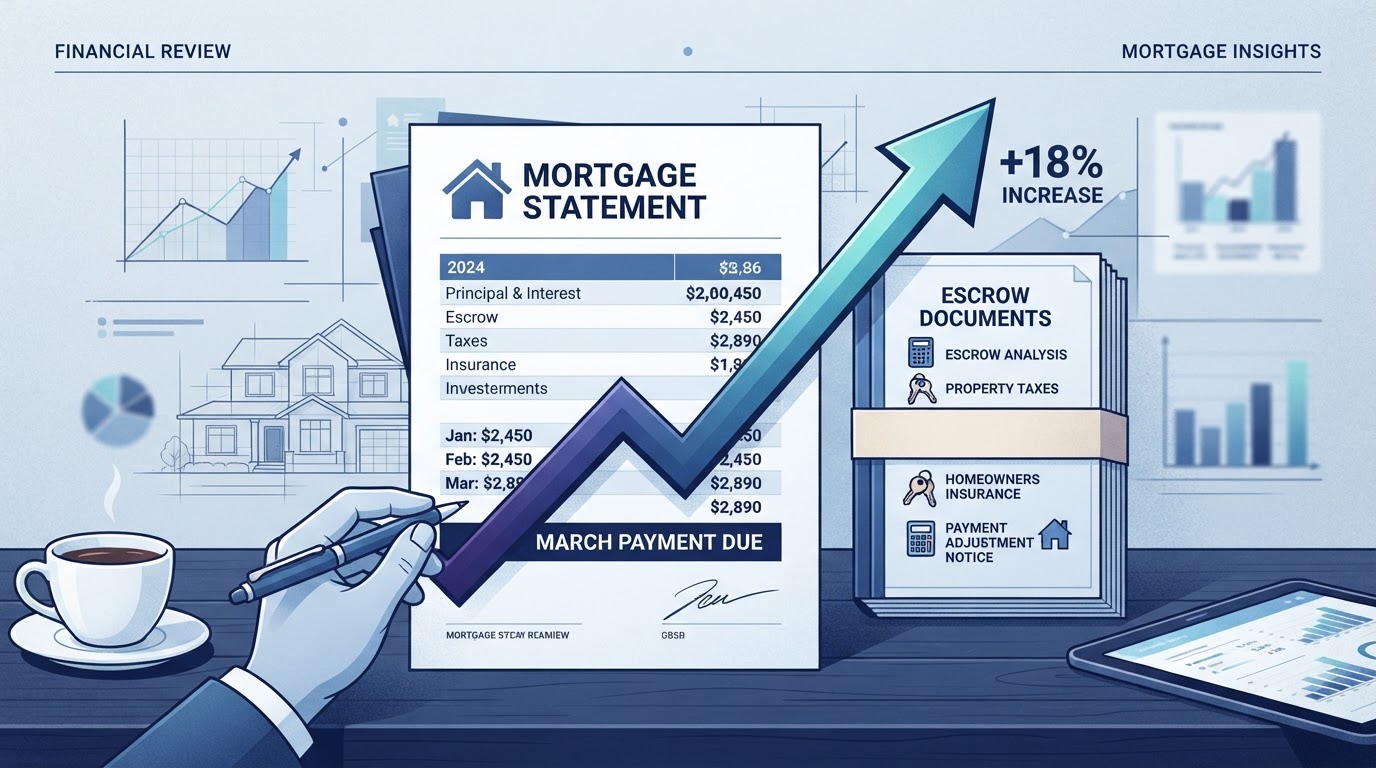
A fixed rate locks your principal and interest, not your whole payment. If your lender collects property taxes and homeowners insurance through escrow, rising premiums or a higher tax bill increase your monthly payment. Cotality projects that 65% of escrow accounts will have a shortage in 2026, averaging about $2,100.
Your Fixed Rate Covers Principal and Interest Only
When you have a fixed-rate mortgage, the principal and interest part of your payment never changes for the life of the loan. That's the part you agreed to when you signed the paperwork, and it's the part most people think of as "the mortgage."
But your total monthly payment is usually more than principal and interest. If your lender set up an escrow account, your payment also includes money for property taxes and homeowners insurance. Those amounts are estimates, and they can go up even when your rate stays the same. That's why a fixed-rate loan can still produce a higher payment year after year.
What an Escrow Shortage Is
An escrow account is a holding account your servicer uses to pay your property taxes and insurance on your behalf. Each month, a portion of your mortgage payment goes into escrow. When the tax or insurance bill comes due, the servicer pays it from that account.
An escrow shortage happens when the money in the account isn't enough to cover the year's actual bills. Maybe your insurance premium jumped, or your property tax assessment rose. When that happens, the servicer has paid out more than you put in, and the difference has to be made up. Servicers review escrow accounts once a year, and when they find a shortfall, they raise your payment to cover both the shortage and the higher costs going forward.
Want to See Your Real Numbers?
Compare your options side by side and see real numbers for your budget in about 60 seconds.
Compare Your Options →Why Shortages Are So Common in 2026
Escrow shortages are hitting more homeowners in 2026 for a few reasons. Cotality projects that 65% of escrow accounts will have a shortage this year, with an average shortage of about $2,100. Across all accounts, the average mortgage payment is expected to rise about $175 a month from escrow changes alone.
One driver is insurance. After a stretch of costly natural disasters, many insurers have raised premiums to cover their losses, and those higher costs flow straight into escrow. The other driver is property taxes. Rising home values push up tax bills, and in some cases lenders underestimate taxes on new construction by counting only the land value at first — so the first full tax bill can be a shock.
How to Read Your Escrow Analysis
Once a year, your servicer sends an escrow analysis statement. It shows what was collected, what was paid out, and whether there's a shortage or surplus. The key numbers to look for are the projected tax and insurance payments for the coming year and the new monthly escrow payment.
If there's a shortage, the statement will show the shortfall amount and give you a choice: pay it in a lump sum or spread it across the next 12 months. If there's a surplus, you may get a refund or a temporary reduction. Read it carefully — mistakes happen, and a wrong tax or insurance figure can inflate your payment. Before you accept the new number, plug your updated taxes and insurance into a mortgage calculator with taxes and insurance to see whether the increase lines up.
Lump Sum vs. Spreading the Shortage
When you have a shortage, you usually get two choices. You can pay the shortfall in one lump sum, which means your monthly payment only rises by the amount needed to cover the higher ongoing costs. Or you can spread the shortage across 12 months, which avoids a big one-time bill but raises your payment more during that year.
There's no single right answer. If cash is tight, spreading it out keeps money in your pocket now. If you'd rather keep the monthly payment as low as possible going forward, paying the lump sum does that. Either way, remember that your payment will still rise if your taxes or insurance went up — the shortage repayment is on top of that increase.
How to Lower Your Insurance Premium
Insurance is one of the two big pieces of your escrow payment, and it's the one you have the most control over. Get quotes from several insurers each year — loyalty to one company doesn't always pay off. Ask about bundling your home and auto policies, and ask about discounts for wind mitigation, a newer roof, or a security system.
Be careful with percentage-based deductibles, which are common in wind or hail-prone areas. A deductible set as a percentage of your home's insured value can cost far more than a flat-dollar deductible when you actually file a claim. A lower premium with a percentage deductible can look cheap until you need to use it. Compare the full cost, not just the monthly price.
How to Appeal Your Property Tax Assessment
Property taxes are the other big piece of escrow, and they're based on your home's assessed value. If that assessment is too high, you're paying more than you should. Check your assessment for errors — wrong square footage, incorrect lot size, or features your home doesn't have can all inflate the value.
If you find a mistake, or if your assessment seems out of line with similar homes nearby, you can file an appeal. Every county has its own process and deadline, so check with your local tax assessor's office. Gather evidence like recent sale prices of comparable homes, and file before the deadline passes. A successful appeal can lower your tax bill and, over time, your escrow payment. These ongoing costs are part of the hidden costs of buying a home that catch many owners by surprise.
Ready to Compare Your Options?
See real numbers for your situation in about 60 seconds — no credit pull, no signup.
Compare Your Options →Frequently Asked Questions
Why did my mortgage payment go up if I have a fixed rate?
A fixed rate locks your principal and interest, not your whole payment. If your lender collects property taxes and homeowners insurance through escrow, rising premiums or a higher tax bill increase your monthly payment. Cotality projects that 65% of escrow accounts will have a shortage in 2026, averaging about $2,100.
What is an escrow shortage?
An escrow shortage happens when the money in your escrow account doesn't cover the year's actual tax and insurance bills. Your servicer reviews the account once a year, then raises your payment to cover both the shortfall and the higher future costs.
Should I pay my escrow shortage in a lump sum or spread it out?
Paying the shortage in one lump sum keeps the monthly increase smaller, since you're only covering the higher ongoing costs. Spreading it over 12 months avoids a big one-time bill but raises your payment more during that year. Either way, your payment will still rise if your taxes or insurance went up.
How can I lower my homeowners insurance or property taxes?
Get quotes from several insurers each year and ask about bundling and wind or roof discounts. Be careful with percentage-based deductibles, which can cost far more when you file a claim. For property taxes, check your assessment for errors and file an appeal before your county's deadline.
MyMortgageWizard is an educational resource and independent marketing portal. We are not a lender or broker and do not issue loan approvals or lock rates. Rates and program rules change; confirm details with a licensed lender.