New Mortgage Credit Scores: VantageScore 4.0 and FICO 10T
By Mortgage Wizard, NJ Licensed Real Estate Salesperson · Updated November 24, 2026
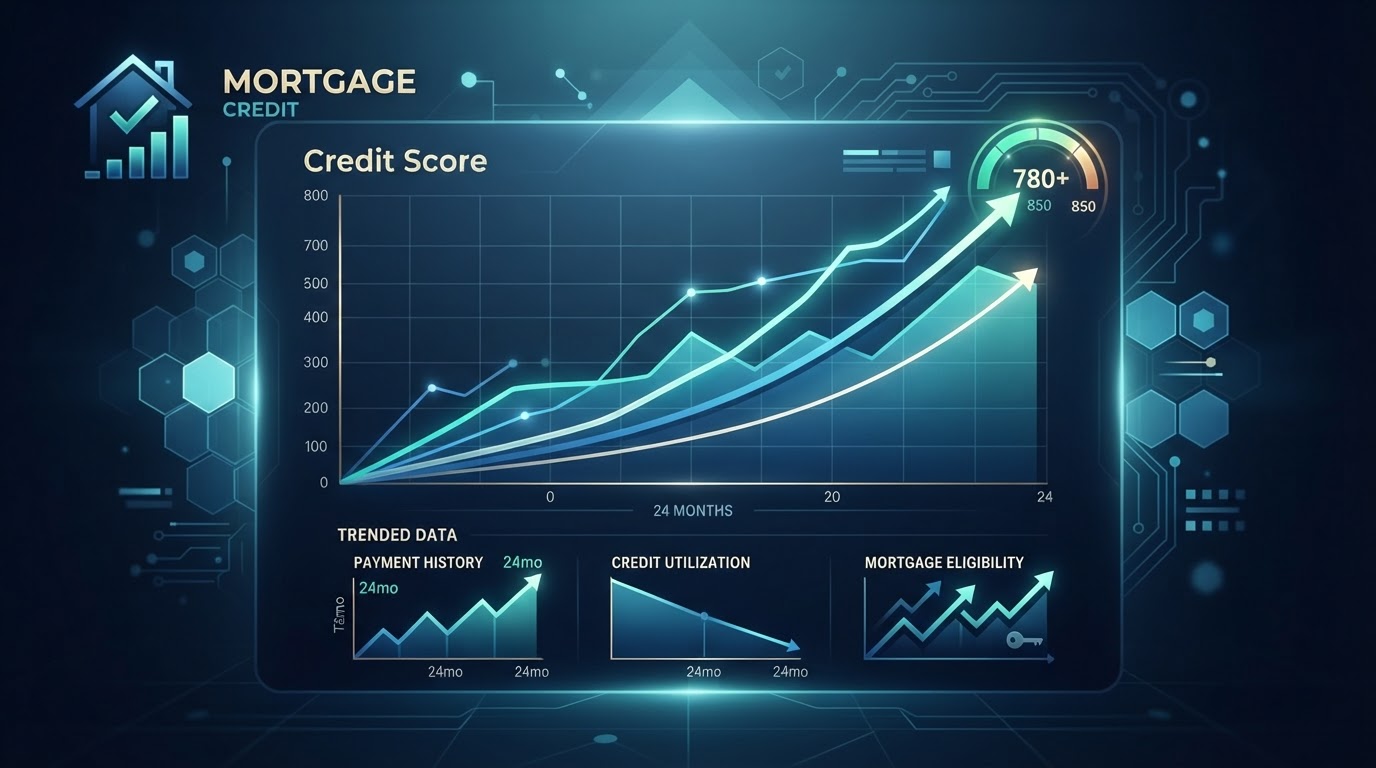
They're newer credit scoring models now accepted for conventional mortgages alongside Classic FICO. Both use trended data, meaning how your balances and payments changed over the past 24 months, not just a single snapshot. Lenders are phasing them in, so ask which model your lender uses.
What Changed
For years, most mortgage lenders relied on older scoring models — the "Classic FICO" scores that look at a single point-in-time snapshot of your credit. That's finally shifting. VantageScore 4.0 and FICO 10T are now accepted for conventional mortgages, and lenders are gradually adding them to their underwriting process.
The change matters because these newer models read your credit history differently. A score that only sees today's balances can miss the full story. A score that watches how those balances moved over two years gets a clearer picture of how you actually manage debt — and that can work in your favor if you've been paying down balances steadily.
It's a phase-in, not a flip of a switch. Some lenders already use the new models; others still pull Classic FICO. Over time, expect more lenders to adopt them, especially for conventional loans. FHA implementation of the new models is still pending, so government-backed loans may follow later.
How Trended Data Works
The biggest shift in the new models is trended data. Instead of looking at your balance on one day, both VantageScore 4.0 and FICO 10T look at how your balances and payments changed over the past 24 months. They can see whether you're steadily paying debt down, holding steady, or creeping upward.
That's good news if your story is one of improvement. Maybe you carried high balances a year ago but have been chipping away at them. A snapshot score might only see today's number. A trended-data score sees the direction — and rewards the progress.
It cuts the other way too. If your balances have been climbing month over month, even if they're not yet high, the new models may flag that trend as a risk. The takeaway is the same one that's always been true: consistent, on-time payments and keeping balances low help your score. Now the models can actually see that you're doing it.
Want to See Your Real Numbers?
Compare your options side by side and see real numbers for your budget in about 60 seconds.
Compare Your Options →Can Rent Payments Help Now?
For many renters, the frustrating part of building credit has been that the biggest monthly payment — rent — often didn't count. VantageScore 4.0 can change that. It can count on-time rent payments when that data is reported to the credit bureaus.
There's a catch, though. Your rent has to actually be reported for it to show up. Many landlords and property managers don't report rent to the bureaus automatically. You may need to ask your landlord to report it, or use a rent-reporting service that sends your payment history to the bureaus on your behalf.
Even then, rent reporting only helps if your lender uses VantageScore 4.0. A lender still pulling Classic FICO won't see the rent data. So if you're a renter hoping to strengthen your file, it's worth asking both your landlord and your lender what's possible. If you're working on your credit more broadly, our guide on how to improve your credit score before buying walks through the steps that move the needle most.
Classic FICO Isn't Going Away Yet
Despite the new models, Classic FICO still plays a major role. Many lenders still use it, and for some loan types it remains the standard. Don't assume the score you see in a free credit app is the one a lender will pull — those apps often show educational scores that can differ from the scores mortgage lenders use.
This is why it's common to see different numbers from different sources. A bank app might show one score, a credit-monitoring site another, and a lender a third. They're not wrong; they're just using different models on the same underlying data.
The practical move is to focus on the habits that help across all models: pay on time, keep balances low, and avoid new credit applications right before applying for a mortgage. Those behaviors raise your score no matter which model a lender uses. If you're just starting out, our overview of first-time home buyer loans explains how credit scores factor into each program.
What to Ask Your Lender
Because the rollout is gradual, the single most useful thing you can do is ask your lender which scoring model it uses. A quick question — "Do you pull Classic FICO, VantageScore 4.0, or FICO 10T?" — tells you which score you're really being judged on.
If your lender uses one of the newer models, trended data and rent reporting could work in your favor. If it still uses Classic FICO, those features won't apply yet, and you'll want to focus on the snapshot factors that model weighs most.
It's also worth asking whether you can shop around. Multiple mortgage credit inquiries within a 14–45 day window are typically counted as one for scoring purposes, so getting quotes from a few lenders in a short period generally won't hurt your score. That means you can compare lenders — and the models they use — without penalty.
How to Prepare Your Credit
No matter which model a lender uses, the fundamentals stay the same. Pay every bill on time — payment history is the biggest factor in every scoring model. Keep your credit card balances low relative to your limits, ideally well under 30% and closer to 10% if possible.
With trended data, consistency matters more than ever. Paying down a balance over several months looks better than a sudden drop right before you apply, because the new models can see the trend. Start early and keep at it.
Avoid opening new credit accounts in the months before you apply for a mortgage, and don't close older accounts, since the length of your credit history still matters. If you rent, look into getting your on-time payments reported. And pull your credit reports from all three bureaus ahead of time so you can dispute any errors — they're more common than people think.
Give yourself a few months of runway. Small, steady improvements add up, and the new models are designed to reward exactly that kind of progress. The more time you give yourself, the more of that trend the scores can see.
Ready to Compare Your Options?
See real numbers for your situation in about 60 seconds — no credit pull, no signup.
Compare Your Options →Frequently Asked Questions
What are VantageScore 4.0 and FICO 10T?
They're newer credit scoring models now accepted for conventional mortgages alongside Classic FICO. Both use trended data, meaning how your balances and payments changed over the past 24 months, not just a single snapshot. Lenders are phasing them in, so ask which model your lender uses.
Does paying rent on time help me get a mortgage now?
It can. VantageScore 4.0 can count on-time rent payments when that data is reported to the credit bureaus. It only helps if your rent is reported and your lender uses VantageScore 4.0. Ask your landlord or a rent-reporting service, and ask your lender which score it pulls.
MyMortgageWizard is an educational resource and independent marketing portal. We are not a lender or broker and do not issue loan approvals or lock rates. Rates and program rules change; confirm details with a licensed lender.