Mortgage Rate Buydowns: How to Lower Your Rate
By Mortgage Wizard, NJ Licensed Real Estate Salesperson · Updated November 24, 2026
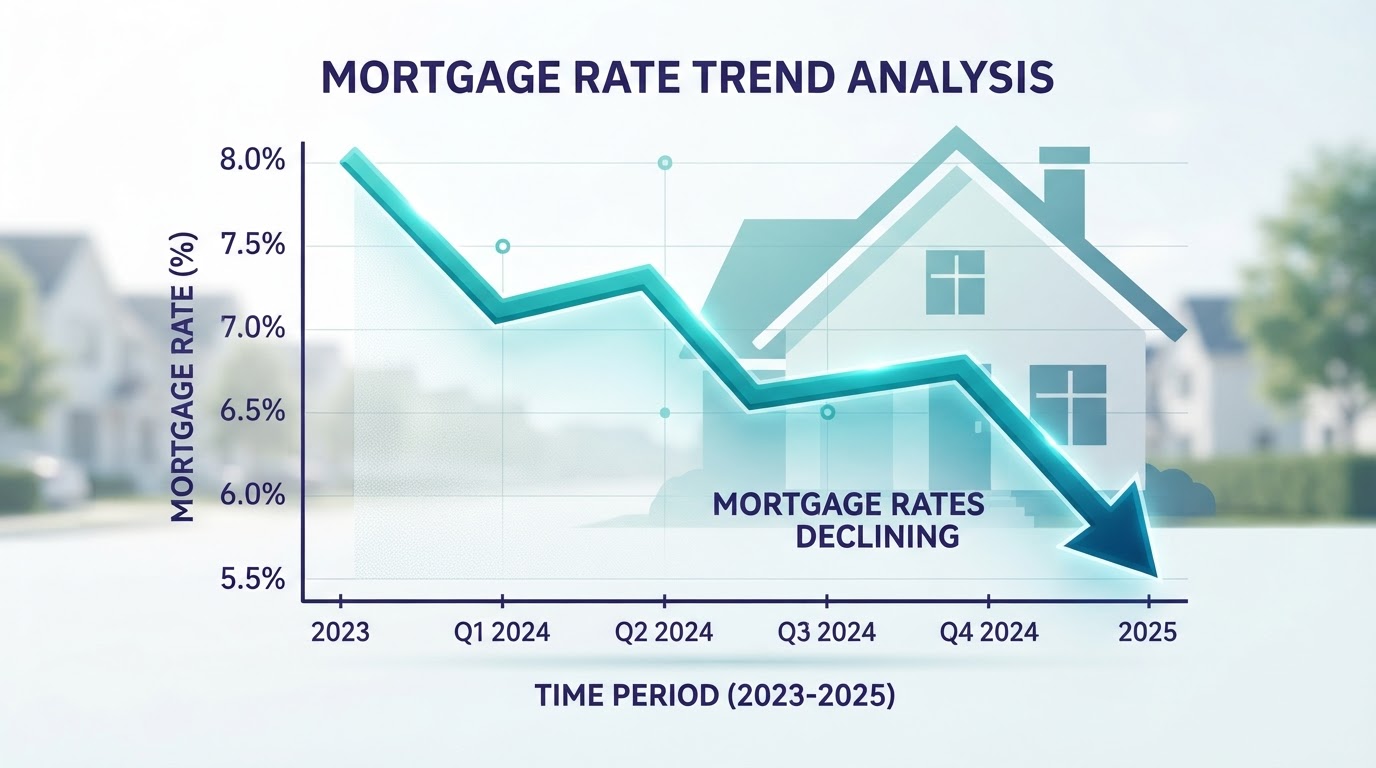
A 2-1 buydown lowers your rate by 2 percentage points in year one and by 1 point in year two, then returns to the full rate. It's most valuable when the seller or builder pays for it. You usually still qualify at the full rate, so the year-three payment must fit your budget.
Temporary Buydowns (2-1 and 1-0)
A temporary buydown is a short-term discount on your mortgage rate, paid for up front so your monthly payment is lower for the first year or two. After that window, the rate steps back up to the full note rate and stays there for the rest of the loan. It's a way to ease into a higher-rate environment without taking on a higher payment on day one.
The most common version is the 2-1 buydown. It lowers your rate by 2 percentage points in year one and by 1 point in year two, then returns to the full rate in year three. A 1-0 buydown works the same way but only for a single year, dropping the rate by 1 point in year one before reverting to the note rate.
Because the reduction is temporary, lenders usually still qualify you at the full note rate, not the discounted rate. That protects you from being stretched too thin once the buydown expires and your payment jumps back up. It also means the year-three payment has to fit your budget on its own — the buydown is a bridge, not a permanent fix.
Who funds the buydown matters a lot. When the seller or builder covers the cost as part of the deal, you get the lower payment without paying for it yourself. When you pay for it out of pocket, it's cash you're spending up front for a short-term benefit, which is a harder trade-off to justify.
Permanent Buydowns With Discount Points
A permanent buydown works differently. Instead of a temporary reduction, you pay discount points at closing to lower your interest rate for the entire life of the loan. The lower rate is locked in, not stepped up after a year or two, so the savings compound for as long as you keep the mortgage.
One discount point costs 1% of the loan amount and usually lowers the rate by about 0.25 points, though pricing varies by lender and changes daily. On a $400,000 loan, one point costs $4,000 up front. Whether that's worth it depends entirely on how long you keep the loan — the longer you stay, the more the monthly savings add up against the one-time cost.
The decision comes down to break-even math: how many months of lower payments it takes to repay the cost of the points. If you sell or refinance before you hit that point, you've spent money you won't get back. If you stay well past it, the points were a smart buy. To run the numbers for your own loan, use our mortgage calculator.
Want to See Your Real Numbers?
Compare your options side by side and see real numbers for your budget in about 60 seconds.
Compare Your Options →How to Calculate Your Break-Even
Break-even is the point where your accumulated monthly savings equal the up-front cost of the buydown. Once you pass it, every month you keep the loan is money in your pocket. Before it, you're still paying off the initial investment.
The math is simple: break-even months equals the cost of the points divided by your monthly savings. If you pay $4,000 in points and save $200 a month, your break-even is 20 months ($4,000 ÷ $200 = 20). Keep the loan longer than that and the points pay off; sell or refinance sooner and they don't.
For a temporary buydown the logic is similar but the window is fixed. You're paying — or the seller is paying — a known amount for a known number of discounted months. If you plan to sell before the buydown expires, the savings are pure upside. If you expect to stay, the value drops off once the rate returns to the full note amount.
The one variable you can't control is future rates. A permanent buydown locks in today's lower rate for good; a temporary one gives you breathing room but leaves you exposed if rates don't fall before it ends. If you're weighing whether to buy now or wait, run both scenarios against your budget before deciding.
Getting the Seller or Builder to Pay
A buydown is a lot more attractive when someone else pays for it. In a deal where the seller or builder is motivated — because the home has been sitting on the market, or they want to close quickly — they may agree to fund a temporary buydown as a concession instead of dropping the price. You get a lower payment for the first year or two; they keep their list price and get the sale done.
This is where the market matters. Sellers are more open to concessions in late 2026 as homes sit longer. In a hot market with multiple offers, asking for a buydown is a tougher sell. In a slower market where a seller is eager, it's often on the table — sometimes more readily than a price reduction, because it preserves the headline number on the listing.
Builders, in particular, sometimes use buydowns as a standard incentive on new construction, since the cost to them is less than a price cut that could hurt comparable sales in the neighborhood. If you're buying new, always ask whether a buydown is available before assuming you have to pay for it yourself.
Seller Concession Limits by Loan Type
Whatever you negotiate, seller concessions are capped by your loan program — the rules limit how much the seller can pay toward your costs, including a buydown. Knowing the ceiling for your loan type tells you how much room you have to work with.
For conventional loans, the limit depends on your down payment: 3% of the price under 10% down, 6% from 10% to 25% down, and 9% over 25% down. FHA loans allow up to 6%. VA loans allow up to 4% in concessions on top of normal closing costs — a meaningful allowance for veterans and service members.
These limits cover more than just a buydown; they apply to closing costs and prepaid expenses too. If you're using concessions for multiple purposes, the buydown has to fit within the total allowance. Your lender can tell you exactly how much is available and how it can be allocated.
Buydown vs. Lower Price: Which Saves More?
When a seller is willing to give something up, you often have a choice: a lower purchase price, or a buydown funded by the seller. Both reduce what you pay, but they do it in different ways, and the better deal depends on how long you plan to stay.
A lower price reduces your loan amount, which lowers your payment a little and your total interest a lot over 30 years — but the monthly difference is usually modest. A buydown, especially a temporary one, can cut your monthly payment more sharply in the near term, which helps if cash flow is the priority.
The trade-off is durability. A lower price is permanent: you borrowed less, so you pay less forever (or until you sell or refinance). A temporary buydown fades — once the discount period ends, your payment returns to the full rate. If you're staying long-term, a price reduction often wins. If you're moving in a few years, a buydown can deliver more value while you're there.
There's no universal right answer. Run both offers through your budget, weigh the monthly savings against the long-term cost, and pick the one that matches your timeline. The best choice is the one that fits your plan, not a generic rule.
Frequently Asked Questions
Is a 2-1 buydown worth it?
A 2-1 buydown lowers your rate by 2 percentage points in year one and by 1 point in year two, then returns to the full rate. It's most valuable when the seller or builder pays for it. You usually still qualify at the full rate, so the year-three payment must fit your budget.
Should I pay points to lower my rate?
One discount point costs 1% of the loan amount and usually lowers the rate by about a quarter point, though pricing varies by lender. To find your break-even, divide the cost of the points by the monthly savings. Points pay off only if you keep the loan longer than the break-even period.
Can I ask the seller to pay closing costs or buy down my rate?
Yes, through seller concessions, within loan-program limits. Conventional loans allow 3% to 9% of the price depending on your down payment, FHA allows up to 6%, and VA allows up to 4% in concessions on top of normal closing costs. Concessions are easier to negotiate when homes have been sitting on the market.
Ready to See Your Numbers?
Compare your buydown options side by side and see real numbers for your budget in about 60 seconds.
Compare Your Options →MyMortgageWizard is an educational resource and independent marketing portal. We are not a lender or broker and do not issue loan approvals or lock rates. Rates and program rules change; confirm details with a licensed lender.